
Lafayette City Directory Holdings
The verified Lafayette city directory trail begins with distinct holdings, not one seamless run. A Lafayette Public Library resource guide says its genealogy and local-history collection has directories for most years from 1946 to the present. “Most years” leaves room for gaps. A separate genealogy institution lists selected Lafayette microfilm years. UL Lafayette adds a discrete 1940 lead in the Bradshaw collection, while the State Library keeps broader Louisiana directory and phone-book holdings.
| Collection | Years | Where Held | Access |
|---|---|---|---|
| Local directory run | Most years, 1946 to present | Lafayette Public Library | Confirm volume or reel with staff |
| Louisiana microfilm rows | 1939, 1941, 1946, 1949, 1952, 1955, 1957–1959 | St. Louis County Library | Microfilm at that institution |
| Bradshaw collection lead | 1940 | UL Lafayette Special Collections | Request collection; appointment advised |
| Louisiana Collection | Historical and current, no full local list posted | State Library of Louisiana | Catalog and librarian confirmation |
No official source inspected names a complete publisher sequence or final printed year. Nor was a browsable official digital Lafayette run found. Record a gap as unknown, not proof that no directory was issued. The Louisiana city-directory microfilm list helps with planning, but its reels belong to the named out-of-state library.
The captured holdings page shows those selected Lafayette years before a request is made.
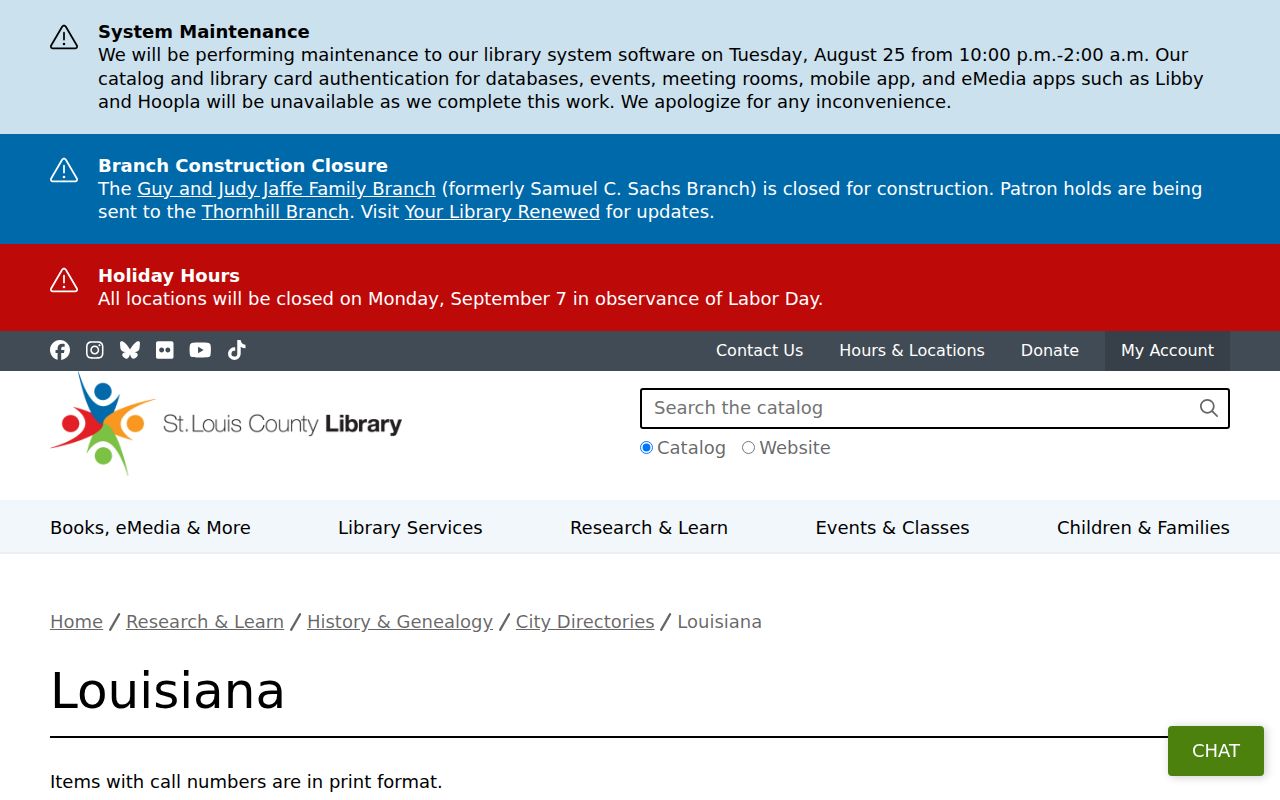
This source reinforces why every year and repository should stay attached to the research note.
Lafayette Archives Beyond Directories
UL Lafayette Special Collections gives a directory entry local context. The collection at 400 East St. Mary Boulevard includes university archives, Acadiana manuscripts, Louisiana materials, rare books, maps, photographs, newspapers, and digital archives. It is open to outside researchers, but picture identification and current registration are required. An archival request form is used for each collection, and an appointment is recommended. The reference desk is in room 314 and can be reached at 337-482-6031.
The City of Lafayette Records, Collection 176, is useful after a directory supplies a date, address, or organization. Its municipal series can be searched by ordinance, subject, and date. A council item may explain an address change that a short listing cannot. The Lafayette Historical Society offers another route through ledgers, newspapers, maps, scrapbooks, ephemera, and photographs among roughly 4,000 collected items.
The Lafayette Historical Society collection summary shows that community archive.

Such material can identify a place or event around a listed person, though the original item still needs a date and citation.
Read a Lafayette Directory Entry
A historical listing should be copied exactly before it is interpreted. Common fields may include surname, given name, street and number, household or business label, phone, spouse, and an occupation or business line. These are fields to seek, not a promise about every volume. No actual Lafayette entry page was accessible during source review, so invented people, marks, or phone numbers would mislead.
| Name | Keep initials, suffixes, accents, apostrophes, and printed order. |
|---|---|
| Address | Copy the original spelling and number even when modern maps differ. |
| Household | Note spouse, relative, or business links exactly as printed. |
| Work line | Treat it as a historical label, not current status. |
| Cross-reference | Follow “see” or residence references after checking the volume key. |
The best identity match combines name, street, number, nearby names, and edition year. One common surname is weak proof. Repeated listings at one place are stronger, but still need a deed, census, obituary, or other dated record.
- Criss-cross directory
- A section arranged by street or phone rather than surname, useful when the address is known first.
- Householder index
- An address-oriented list that may identify the person linked to a household.
- Abbreviation key
- The volume’s guide to shortened terms and symbols; consult it before decoding an entry.
Lafayette Newspapers Fill Directory Gaps
Directories give compact snapshots. Newspapers add relatives, funeral details, clubs, churches, sales, and address notices. UL Lafayette lists the Daily Advertiser from 1914 to the present, with electronic text from 2002 forward. Its obituary index spans 1882 through 2022, earlier than the verified city directory run. An index hit is only a pointer. Inspect the dated issue or request a copy before relying on its names and places.
The Lafayette Gazette supplies another bridge from 1893 to 1921. Other titles include Daily Press, Lafayette Democrat, Lafayette City Business, Independent, Acadiana Free Press, Cajunear of Lafayette, Southside Guide, and Lafayette Guide. Search a surname with a first initial, street, parish, church, subdivision, “estate of,” or funeral term.
The UL Lafayette newspaper holdings and obituary index show the available title and date leads.
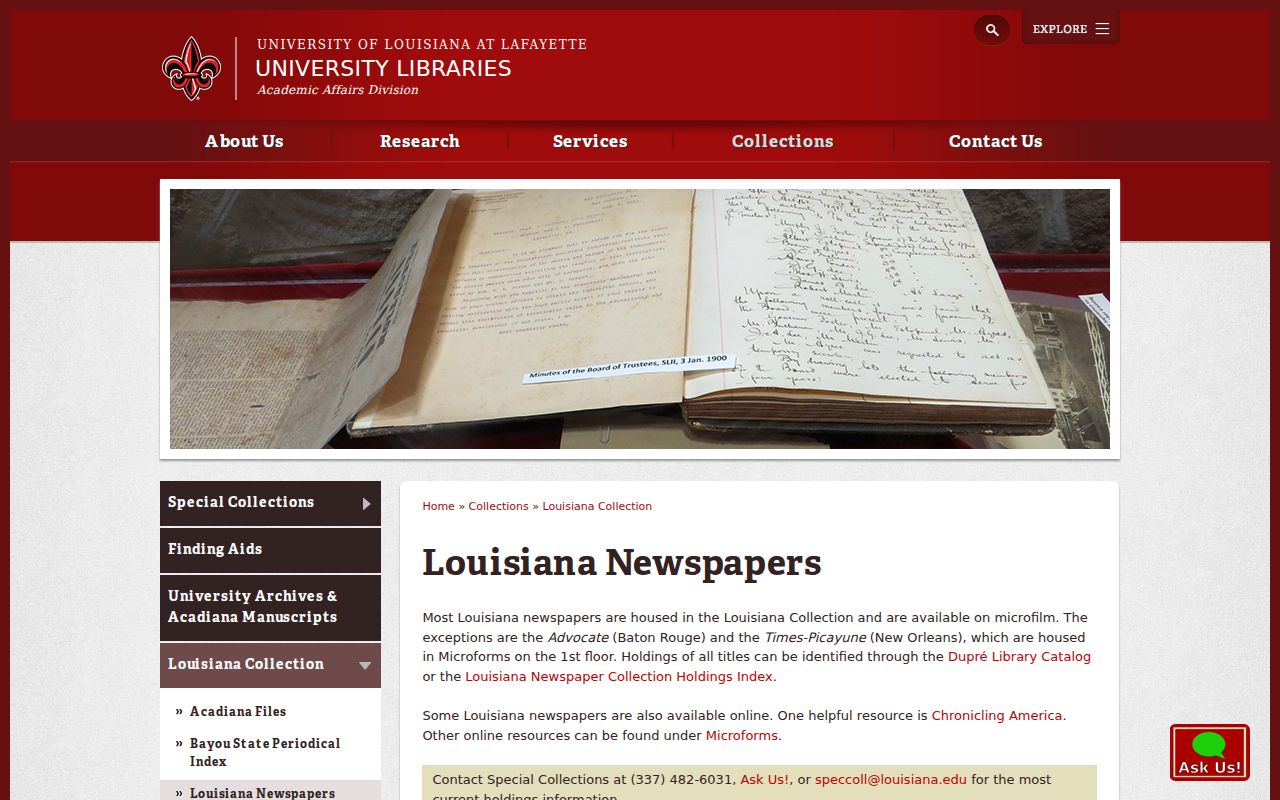
The screen begins an issue request; it does not replace reading the notice itself.
Reverse Lafayette City Directory Searches
A criss-cross search begins with a place instead of a surname. No verified Lafayette reverse-directory shelf location was found. Ask the local-history desk to search its catalog, microfilm, and vertical files for reverse, street, telephone directory, and Lafayette terms. If no reverse volume exists, combine the directory street section with tax, voter, deed, and newspaper address records.
Keep ownership and occupancy apart. A deed chain identifies legal owners, while a city directory may place an apparent occupant. A mailing address is another distinct fact. The Lafayette street directory workflow handles modern address-first research.
The Lafayette Parish Assessor forms page shows an official property access route for a later cross-check.
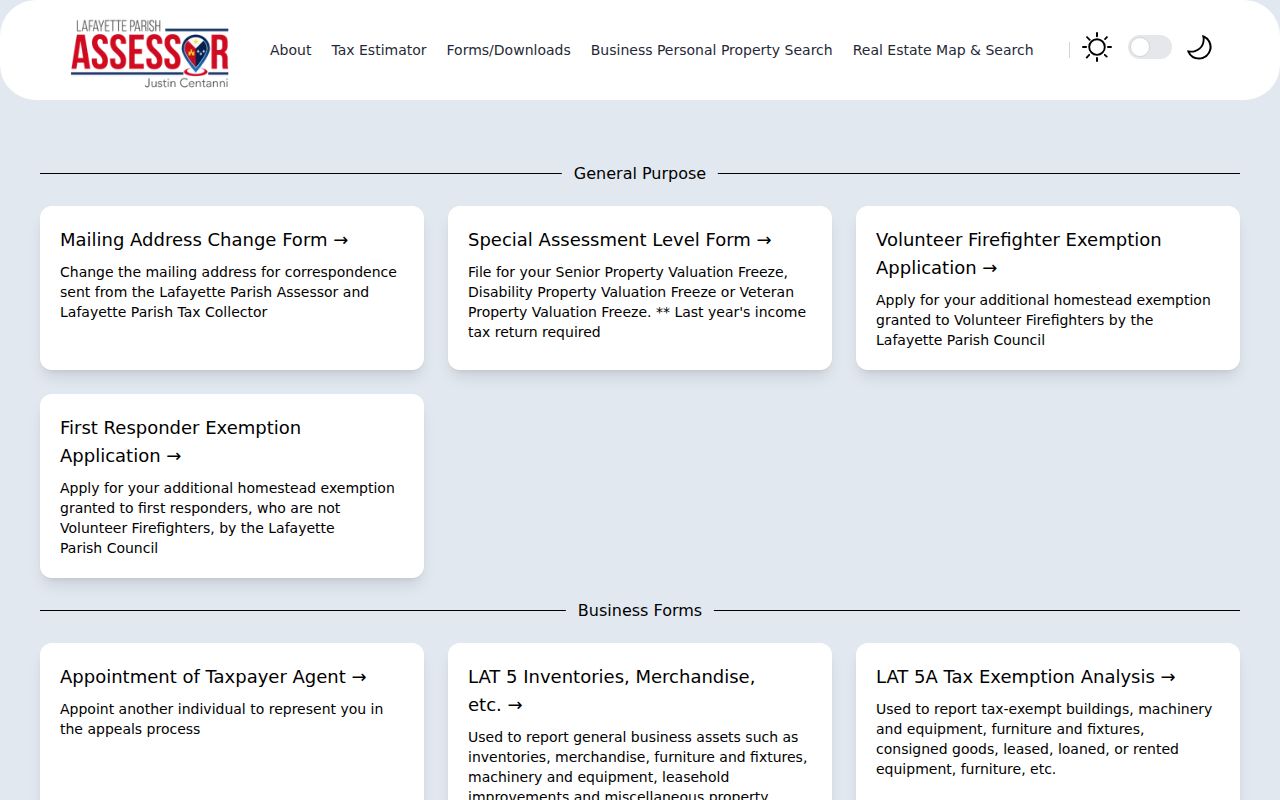
This property source confirms current parcel context, not present residence from an old listing.
Lafayette Directory Research Timeline
Lafayette family research crosses sources with different starting points. That mismatch tells a researcher when to leave the shelf and approach another custodian.
| Date | Verified milestone |
|---|---|
| 1882 | Daily Advertiser Obituary Index coverage begins. |
| 1893 | Verified Lafayette Gazette run begins. |
| 1903 and 1912 | Sanborn sets offer block and building snapshots. |
| 1939–1959 | Selected directory years appear in the microfilm list. |
| 1946 forward | Local guidance reports directories for most years. |
Sanborn maps show buildings and blocks, not identity rosters. Compare them with a dated listing, legal description, or paper. This avoids projecting a current street number backward.
Research gap. No verified courthouse-fire or full records-loss chronology was found, so do not use that story to explain a missing Lafayette volume.
Trace Families Through Lafayette Directories
A good city directory trail follows a household through several dated sources. Disappearance does not prove death. A person may have moved, changed a surname, declined a listing, or fallen into a missing edition. Acadiana surnames can carry French spellings, accents, apostrophes, initials, compound forms, and anglicized variants. Preserve each form.
- Choose the closest verified year and record repository, edition, page, and exact entry.
- Move through available years, noting each address, spelling, household link, and gap.
- Check the street section for nearby names, while keeping neighbors distinct from relatives.
- Pair the sequence with census years, deeds, and the issue named by an obituary index hit.
- Use civil or church records to test relationships, labeling any inference the source does not state.
The Diocese of Lafayette can help when a probable parish, sacrament, and date are known. Pre-1993 records are not name-searchable in the same manner. A church entry may supply parents, sponsors, or witnesses, but remains distinct from a civil certificate.
Access Lafayette Historical Collections
Start locally, then widen the search. Ask Lafayette Public Library staff to confirm a year and format. Contact UL Special Collections before visiting. Search the State Library catalog by place and subject, and ask whether a Lafayette reel is available. The Louisiana State Archives catalog is a fallback for government, manuscript, photograph, newspaper, census, church, and family material.
Older parish microfilm at the Archives may require permission from the Lafayette Parish Clerk because the Clerk retains custody. The Lafayette Genealogical Society can help interpret Attakapas-area sources. Neither a society nor a catalog replaces the record. Mark every result as inspected, staff-confirmed, or merely a catalog lead.