
Lafayette Resident Lookup Sources
No single official database proves a person lives in Lafayette today. A resident lookup should ask one narrow question at a time. Property records link an owner to a parcel, voter tools check a public registration route, court indexes identify cases, and vital certificates establish an event only for eligible requesters. Business and license records show a dated legal role or credential, not a home.
| Record | What It Confirms | Where | Access |
|---|---|---|---|
| Voter registration | Public registration match and election details | Louisiana Voter Portal | Free public modes; protected fields withheld |
| Parish court index | Named party, case context, dates | Lafayette Clerk / ClerkConnect | Subscription online; copies by department |
| City Court | City or juvenile court routing and schedule | Lafayette City Court | Online services, phone, or counter |
| Vital record | Birth, death, marriage, or divorce event | LDH or Lafayette Clerk | Eligibility, ID, and fee rules apply |
| Entity or license | Dated legal role, status, or credential | Louisiana state custodian | Official search varies by board |
Begin with the record most likely to contain the known detail. Save the search terms, date, source, and record identifier. A second independent record should match before two same-name entries are treated as one person.
Normalize Names for Lafayette Lookup
Acadiana names may appear with French spellings, accents, apostrophes, compound surnames, initials, or anglicized forms. Search the exact spelling first. Then try the form without punctuation, a middle initial, a full middle name, surname-first order, and known former surnames. Keep suffixes such as Jr. and Sr. attached to the correct person.
For a common name, add one field at a time. ZIP, parish, month and year of birth, street, spouse, parent, document number, or case number can separate matches. Never merge records merely because both say Lafayette. The label can refer to the city, parish, court division, postal city, or an old address.
Businesses, estates, trusts, and organizations may appear in the same indexes as people. Record the capacity shown, such as owner, officer, agent, vendor, vendee, or party. A registered-agent address is an entity contact field and does not establish residence.
Check Lafayette Voter Lookup Fields
The Louisiana Secretary of State Voter Portal offers a public person mode with first name, last name, ZIP code, and birth month and year. Address mode uses ZIP, address, apartment or lot, and city. The portal also offers parish, polling-place, election-result, and other election routes. Use the public result only for what it actually states.
| Field | Use | Format note |
|---|---|---|
| First and last name | Required identity search | Try verified spelling variants separately |
| ZIP code | Narrows the name search | A postal label is not a city boundary |
| Birth month/year | Separates same-name residents | The portal does not make all birth data public |
| Address and unit | Runs the address mode | Use the official street form |
Louisiana law keeps specified voter data out of public release, including Social Security and driver-license details, personal email, protected-victim information, and other sensitive fields. The Lafayette Registrar of Voters is the office fallback when a portal match is unclear. A voter result is a dated registration clue, not proof of current occupancy.
Search Lafayette Courts Separately
Lafayette resident lookup work must distinguish three court systems. The Fifteenth Judicial District Court handles original civil and criminal jurisdiction for Lafayette, Acadia, and Vermilion Parishes. The Lafayette Parish Clerk keeps its filing index. Lafayette City Court is separate and covers city and juvenile matters, civil, criminal, and traffic jurisdiction within its territory. Federal cases use the Western District of Louisiana Lafayette Division.
The Lafayette Clerk online-records page describes ClerkConnect civil indexing from January 1, 1986, with images from May 24, 2006. Criminal, traffic, and family-nonsupport information can include offense date, charge, case history, service, minutes, and disposition. Juvenile, sealed, expunged, protected-victim, and investigative material may be unavailable or redacted.
The ClerkConnect entry screen is shown below.
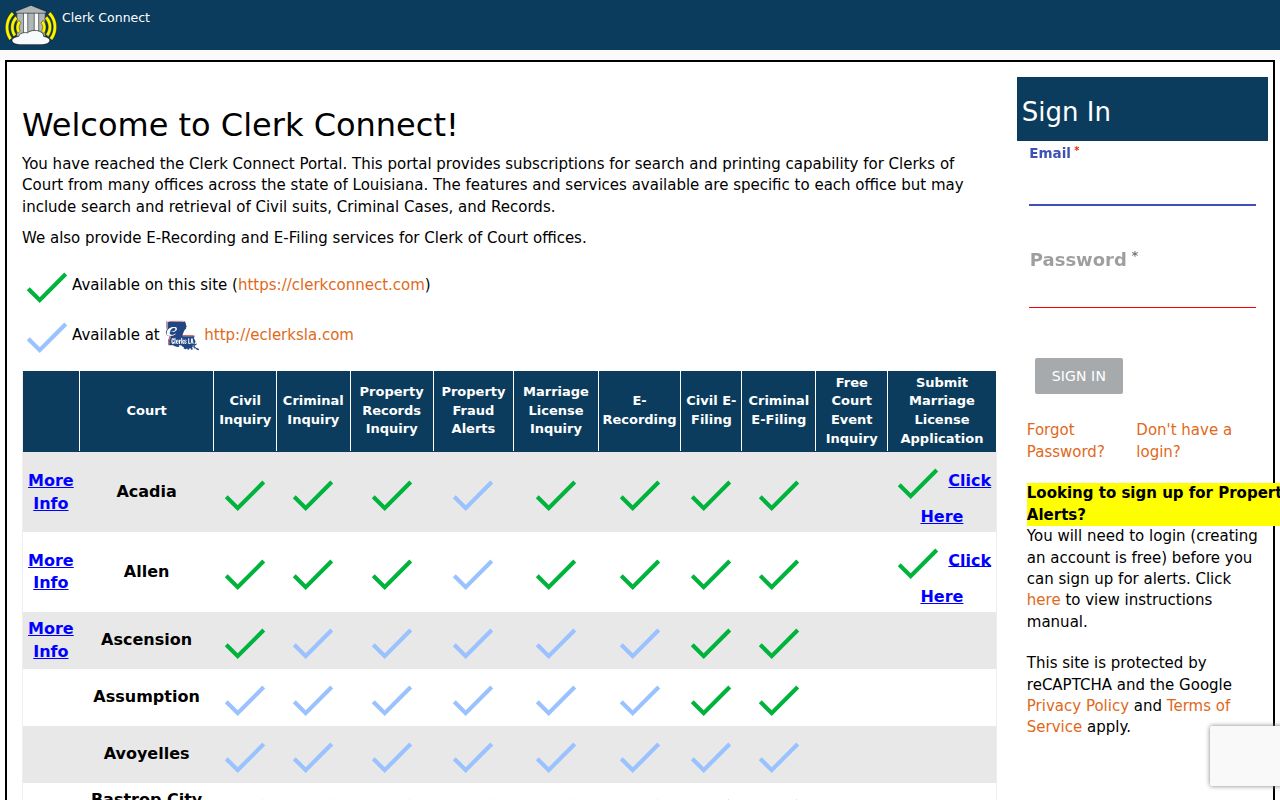
The login is a route to participating clerk records, not proof that every Lafayette case image is open.
| Case number | The most reliable key when known. |
|---|---|
| Party name | Use variants and confirm the role in the case. |
| Filing and case type | Place the result in time and jurisdiction. |
| Minutes or disposition | Read the dated case action; do not infer guilt from an index. |
| Document image | May require subscription, fee, or a Clerk copy request. |
Verify Lafayette Resident Records
A careful search anchors a name to a dated official record, then checks a second source that was created for another purpose. This lowers the chance that two people with similar names are combined.
- Standardize the name and write down the one known date, address, ZIP, case, or entity link.
- Search the narrowest official index and preserve the exact name, role, date, and identifier shown.
- Test one matching field in a second official source. Keep parcel owner, voter, litigant, and certificate subject as different roles.
- When an index is not enough, request the record image or certified copy from its custodian.
- Record restrictions, redactions, uncertainty, and the date each result was checked.
- Docket
- The court’s chronological record of filings and actions in a case.
- Index versus image
- An index points to a record; an image displays the underlying filed page.
- Certified copy
- A custodian-authenticated reproduction used when an ordinary printout is not enough.
The Clerk’s certified land index dates can help define the scope of a land-related name match. The Certified Good-Thru page presents those record categories and dates.
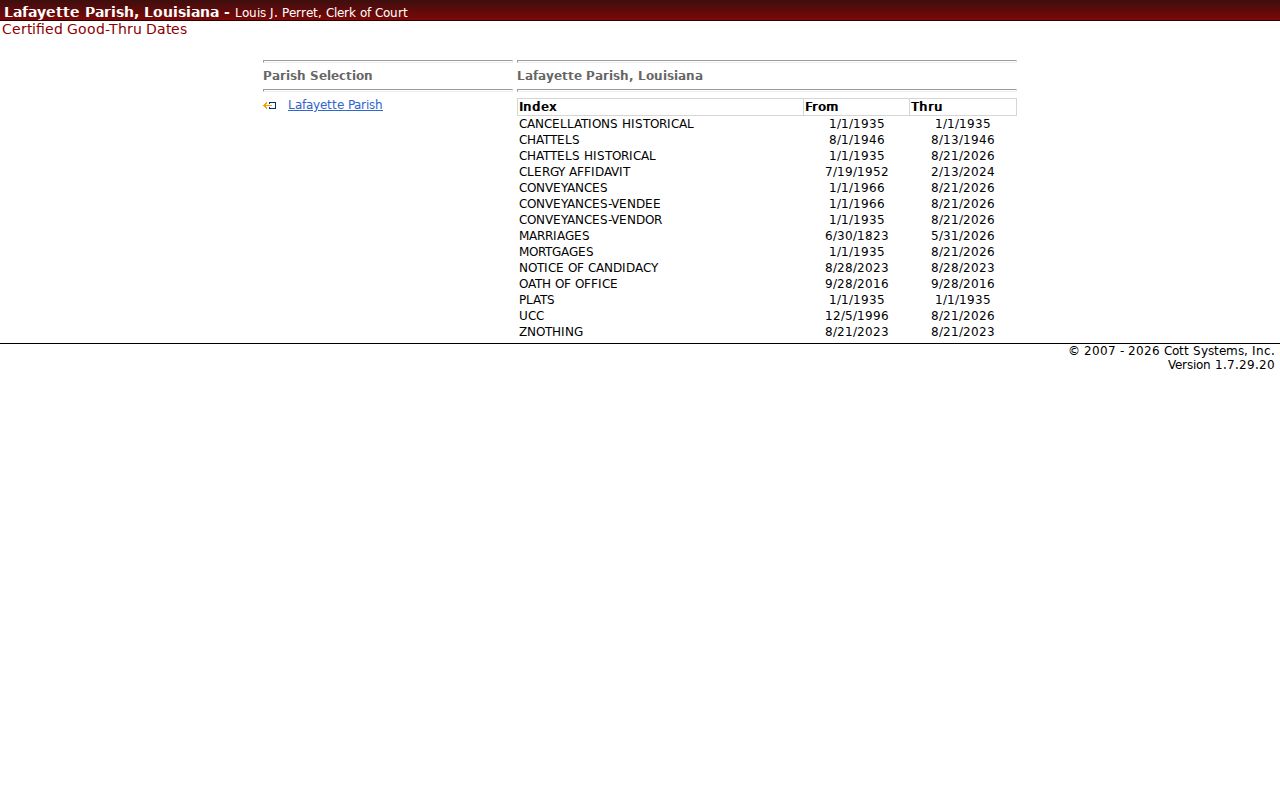
The table helps date an index search, but land-party status alone does not establish residence.
Lafayette Vital Records Have Limits
Louisiana Vital Records Registry controls state birth and death certificates. Birth records remain restricted for 100 years after the year of birth, and death records for 50 years after the year of death. Eligible applicants must follow relationship, identification, application, and fee rules. The Lafayette Clerk can issue authorized birth and death certificates, while marriage and divorce records remain with the Clerk where the license or judgment was issued.
Vital access has several channels. Use the LDH Vital Records route and its ordering packet for state service. The Lafayette Clerk Birth Department and Death Department provide local issuance. Older transferred materials may be researched through the State Archives, while church records remain separate from civil certificates.
When a civil record is restricted, the Daily Advertiser Obituary Index can supply a date lead, and the Diocese of Lafayette may research a known sacrament, parish, and date range. Neither source defeats civil eligibility rules. An index or sacramental record also should not be described as a certified civil certificate.
Find Lafayette Family Connections
Probate and succession files can identify heirs, representatives, estates, and court actions. Search those matters through the parish civil or family/probate route, then ask the Clerk for a needed image. Newspapers can add surviving relatives and funeral locations. UL Lafayette’s obituary index covers 1882 through 2022 and becomes much more useful when the actual issue is read.
The Louisiana State Archives catalog can locate government, manuscript, photograph, newspaper, microfilm, census, church, and family material. The State Archives online catalog is shown below.
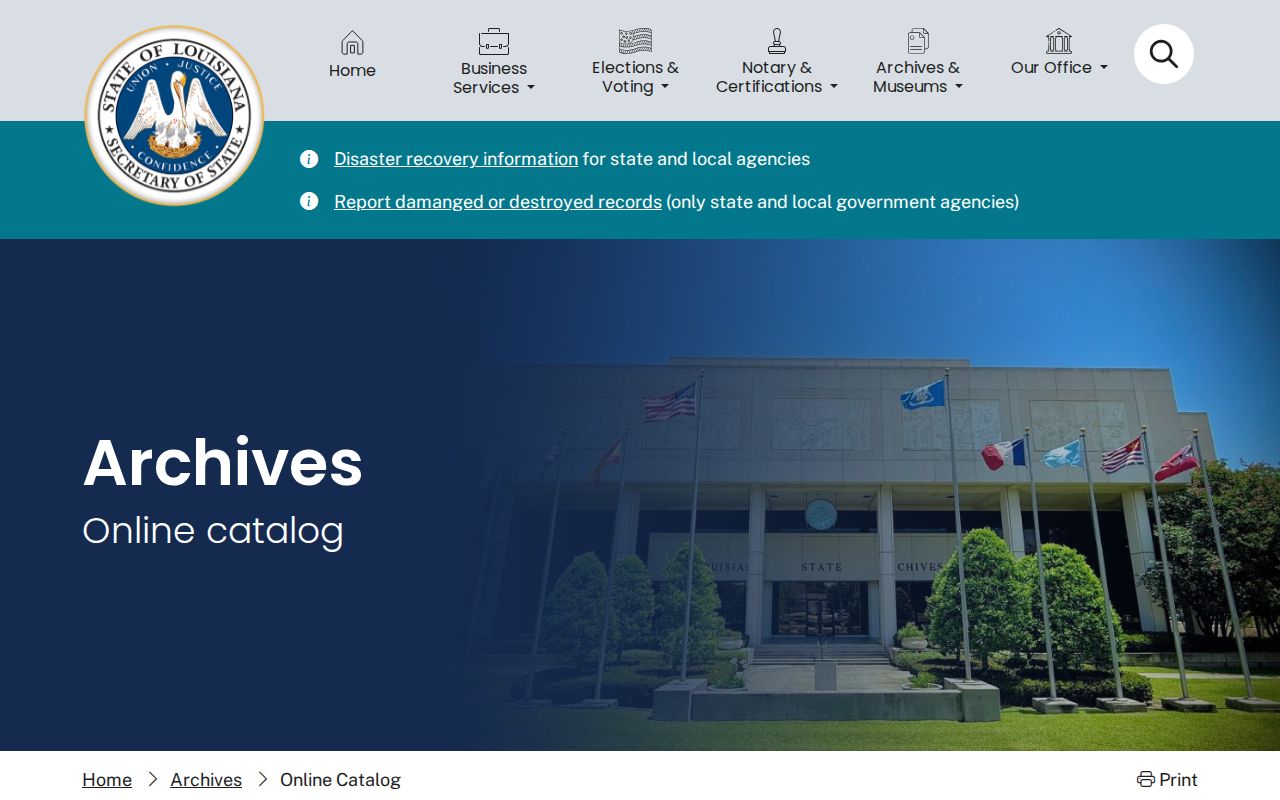
A catalog result is a collection lead. Ask whether the item is indexed, open, and available remotely before treating it as person-level evidence.
Unclaimed property offers another lawful family or estate clue. Search the official Treasurer route by a person's or business name, city, and ZIP, then follow the claim process only if entitled. The Louisiana unclaimed-property search is pictured below.
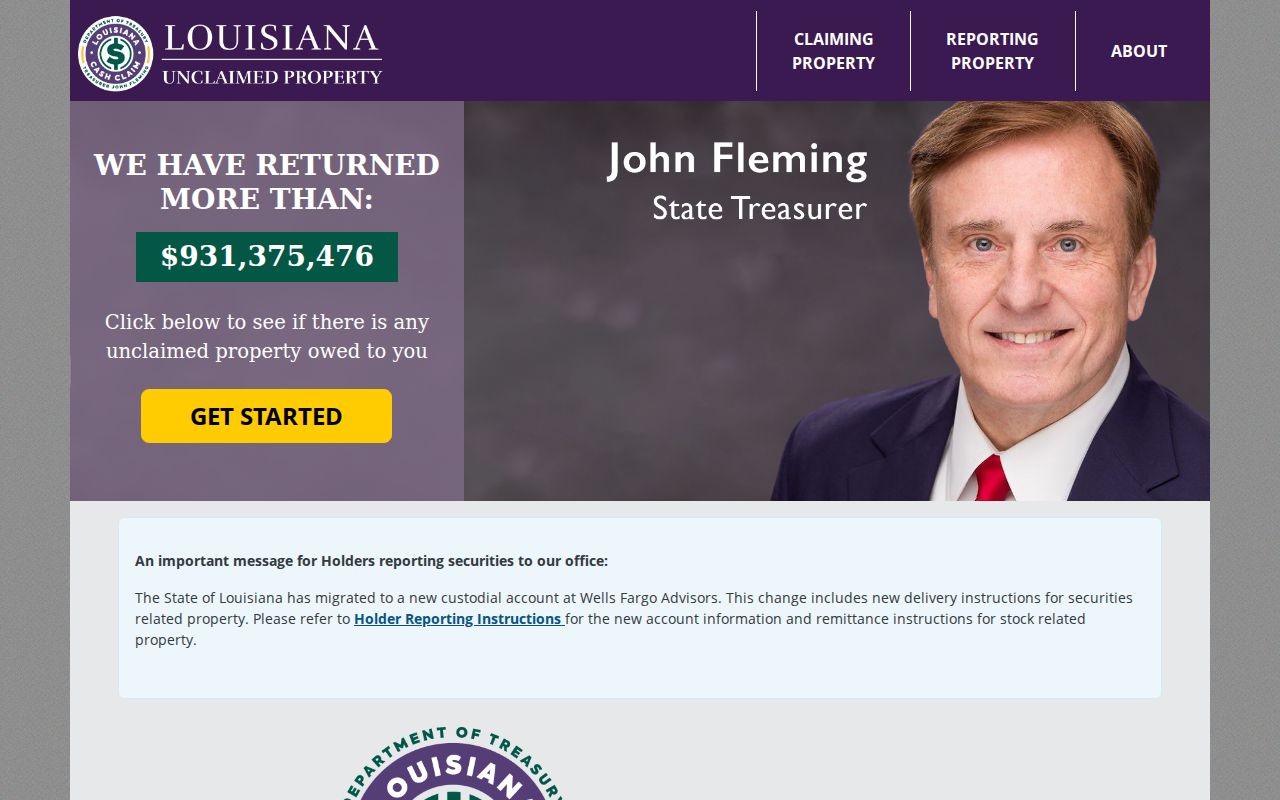
A match signals property held by the state and does not establish the person's present address.
Request Missing Lafayette Records
When no public search exists, contact the custodian. Lafayette City Court exposes fine, warrant, and schedule services but no general party-name form; its civil or criminal and traffic divisions can route an inquiry. The Parish Clerk takes copy questions by department. The courts, Clerk counter, phone, mail, and subscription services are distinct access channels.
For municipal address, permit, map, or administrative material, Lafayette Consolidated Government uses JustFOIA. The system launched in March 2025 and supplies request IDs, account tracking, notices, and fee steps. Louisiana Public Records Law, La. R.S. 44:1 et seq., supports inspection and copying subject to exemptions. Keep a request narrow: name the record series, date range, office, address, or case.
For a modern address-to-person question, shift to the Lafayette street directory process. For an older household, consult the Lafayette city directory collections. Each route owns a different question.
Lawful Lafayette Resident Lookup
Official access does not erase privacy rules. Louisiana's Address Confidentiality Program can give a substitute address to qualifying people who relocated because of abuse, sexual assault, or stalking. Other statutes can protect specified fields or permit removal from some online displays. A missing address may reflect a valid safeguard, not a search error.
Correct an official record through the office that keeps it. Use a case, document, parcel, or other identifier and ask for the correction, redaction, or review route. Commercial search suppression does not delete a deed, docket, voter record, newspaper, or archive item held elsewhere.
Lawful use. Use a Lafayette resident lookup only for lawful personal research. Louisiana law forbids stalking, cyberstalking, harassment, threats, and attempts to defeat protected-address programs.
Collect only what is needed to resolve the question. Do not republish sensitive identifiers or a protected person's location. If safety is at issue, use the confidentiality program, victim services, court, or law-enforcement route.